

Fresh air isn’t a luxury—it’s a daily essential. Air Purifiers & Humidifiers on Appliance Street is your go-to destination for creating a cleaner, healthier, and more comfortable indoor environment. Whether you’re battling allergens, taming dry winter air, neutralizing odors, or simply aiming for better sleep and breathing, this space brings clarity to the science and simplicity to the choices. Here you’ll explore how air purifiers capture dust, pollen, smoke, and microscopic particles, and how humidifiers restore balanced moisture that supports skin health, sinuses, plants, and even wooden furniture. From compact units for bedrooms to whole-home solutions, we break down features like HEPA filtration, smart sensors, noise levels, maintenance needs, and energy efficiency in a way that’s practical and easy to understand. Our articles guide you through real-world use cases, seasonal needs, and lifestyle considerations—helping you match the right appliance to your space, climate, and routine. If better air quality and everyday comfort matter to you, you’re in the right place. Breathe easier, live better, and discover what fresh air can really do.
A: Match it to the room’s square footage and look at CADR/ACH—bigger rooms need higher airflow.
A: If you’re targeting dust, pollen, and smoke particles, True HEPA-style filtration is typically the go-to standard.
A: Partly—odors and VOCs are best handled by activated carbon (and removing the odor source).
A: Put it where air can flow freely—avoid corners, give it clearance, and use the room where you spend the most time.
A: Cool mist is efficient and common; warm mist feels cozy but uses more electricity and runs hot.
A: Minerals in hard water can become airborne with ultrasonic units—try distilled water or a demineralization filter.
A: Ideally empty/rinse daily and deep-clean routinely—stagnant water can create buildup and odors quickly.
A: Yes if humidity stays too high—use a hygrometer and aim around 30–50% RH in most homes.
A: It depends on use and air quality—pre-filters need frequent cleaning; HEPA/carbon are replaced on the maker’s schedule or when performance drops.
A: Many people do—continuous low speed often balances clean air, noise, and energy use best.
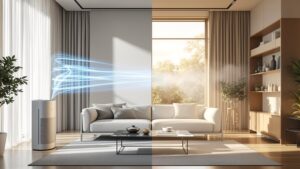
Air Purifier vs Humidifier: Which One Do You Really Need?
Dry air or dirty air—which is really affecting your comfort? Discover the key differences between air purifiers and humidifiers, how each transforms indoor air quality, and how to confidently choose the right solution for your home, health, and everyday comfort.
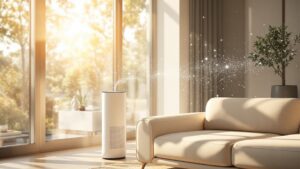
Do Air Purifiers Actually Improve Indoor Air Quality?
Can an air purifier truly transform the air inside your home? Discover how HEPA filtration, carbon filters, and smart airflow work together to reduce allergens, smoke, and fine particles—plus what these devices can and cannot realistically do for your indoor air quality.