Modern households increasingly want appliances that reduce environmental impact while still delivering powerful performance. Washing machines are among the most frequently used appliances in many homes, making them an ideal place to improve efficiency. Over the past two decades, a quiet revolution has taken place in laundry rooms around the world. Eco washing machines—sometimes called high-efficiency washers—have transformed how clothes are cleaned by dramatically reducing water use without compromising cleanliness. At first glance, this idea might seem counterintuitive. Many people still associate effective laundry with large tubs of water sloshing around clothes. However, advances in engineering, sensor technology, drum design, and detergent chemistry have proven that effective cleaning requires far less water than traditional machines once used. Today’s eco washing machines use smart technology and precise mechanics to achieve exceptional cleaning results while conserving water, energy, and detergent. Understanding how these machines accomplish this balance reveals a fascinating blend of physics, mechanical design, and digital intelligence. The result is an appliance that cleans thoroughly, treats fabrics gently, and helps households reduce both utility bills and environmental impact.
A: Yes, they are built to meter water more precisely based on the load and cycle instead of using a fixed deep fill.
A: Yes, modern machines rely on tumbling action, spray systems, detergent concentration, and smart cycle control to maintain cleaning performance.
A: Longer cycle times help compensate for lower water and lower heat, giving detergent and drum action more time to work.
A: In many cases yes, because they clean by tumbling through a shallow pool rather than filling a tall tub.
A: Use HE detergent in high-efficiency machines to control suds and improve rinsing in low-water conditions.
A: Final moisture depends on spin speed, fabric type, load balance, and cycle restrictions set to protect garments.
A: Not necessarily; it can help with certain bulky loads, but everyday washing is usually more efficient with automatic sensing.
A: Yes, especially when paired with the right cycle, pre-treatment, proper detergent dose, and options like soak or steam.
A: Clean the drum, gasket, filter, and dispenser regularly, and avoid detergent overuse that can cause buildup.
A: It often saves twice—first through reduced water use and again through shorter drying times after faster spin extraction.
The Shift Toward Water-Efficient Laundry Technology
Traditional washing machines—especially older top-load models—relied on filling the drum with a large volume of water so that clothes could float freely during agitation. While this approach certainly cleaned garments, it was extremely wasteful. A single load in an older washer could consume 40 gallons of water or more.
Eco washing machines approach the problem differently. Rather than relying on large amounts of water to move clothes around, they focus on optimizing mechanical action and targeted water use. By carefully controlling how fabrics interact with water, detergent, and drum movement, modern washers achieve superior cleaning using dramatically less water.
Today’s eco-friendly washers often use between 10 and 20 gallons of water per load, depending on the cycle and load size. This represents a reduction of up to 70 percent compared with some older machines. Multiply that savings across hundreds of loads per year, and the impact becomes significant both for household budgets and for environmental sustainability.
This transformation has been driven by a combination of consumer demand, government efficiency standards, and technological innovation within appliance manufacturing.
Precision Water Management Through Smart Sensors
One of the most important reasons eco washing machines can use less water is the integration of intelligent sensor systems. These sensors continuously analyze conditions inside the washing drum and adjust the wash cycle accordingly.
Load sensors detect the weight of the clothing placed inside the drum. By measuring the load size, the machine determines the exact amount of water needed for effective cleaning. This prevents the common problem of filling a large tub with water for a small load.
Fabric sensors can also analyze how quickly water is absorbed by garments. Heavy fabrics such as towels and denim require different water levels than lightweight materials like athletic wear or synthetic blends. By measuring water absorption rates, the washer fine-tunes water usage in real time.
Some advanced models also include turbidity sensors that evaluate how dirty the wash water becomes during the cycle. If the water remains relatively clean, the machine may shorten rinse cycles or reduce additional water intake. If heavy soil is detected, the washer can increase agitation or add an extra rinse to ensure clothes are fully cleaned.
This intelligent water management system allows eco washing machines to deliver precise cleaning power while eliminating unnecessary water consumption.
High-Efficiency Drum Design and Mechanical Action
Water alone does not clean clothes. Effective laundry relies on mechanical motion that loosens dirt and allows detergent to break down stains. Eco washing machines maximize this mechanical cleaning action through advanced drum designs.
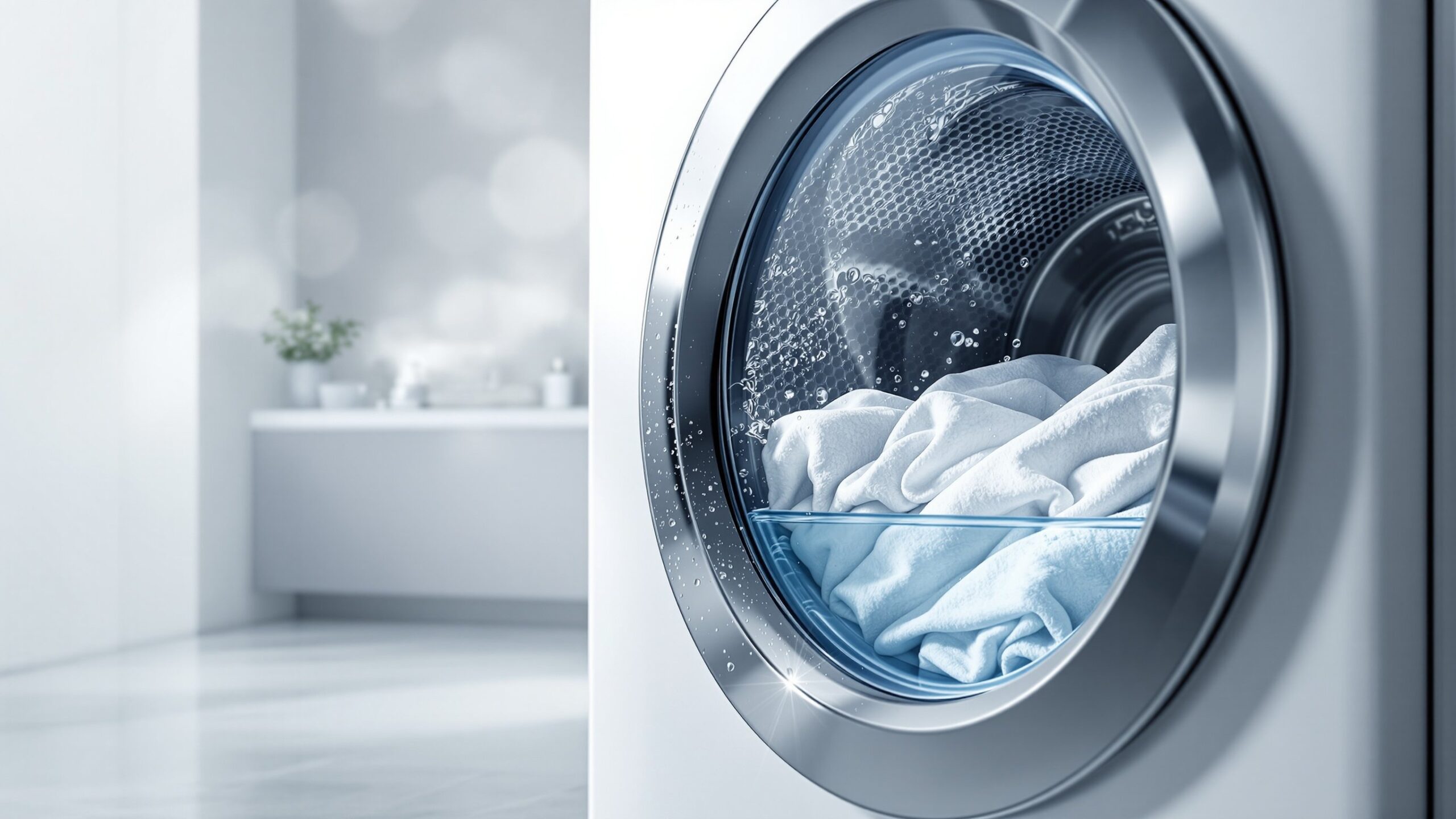
Front-loading washers, which dominate the high-efficiency category, use a rotating horizontal drum that lifts clothing upward and then drops it back into a shallow pool of water. This tumbling motion creates friction between garments, helping to remove dirt and oils without requiring large amounts of water.
Because clothes repeatedly fall through the water rather than floating in it, detergent becomes more concentrated and effective. The constant tumbling action mimics the scrubbing effect of hand washing but does so gently and consistently across the entire load.
Many eco washers also incorporate specially textured drum surfaces or unique paddles designed to guide fabrics through optimal movement patterns. These designs help distribute water evenly across garments, ensuring that every item receives sufficient cleaning action.
The result is a wash process that relies on physics and movement rather than excessive water.
Concentrated Detergent Efficiency
Another key factor in eco washing performance is the use of specially formulated high-efficiency detergents. These detergents are designed to work effectively in low-water environments. Traditional detergents were developed for machines that used large amounts of water. In high-efficiency washers, these detergents can produce excessive suds, which may interfere with cleaning and rinsing performance.
High-efficiency detergents, often labeled with “HE,” produce fewer suds while maintaining strong stain-removal capabilities. Their concentrated formulas allow them to dissolve quickly in smaller amounts of water, enabling detergent molecules to penetrate fabrics more effectively.
This concentrated cleaning process actually enhances performance. With less water diluting the detergent, the cleaning agents can focus directly on breaking down oils, dirt, and organic stains embedded within fabric fibers. As a result, eco washing machines often achieve deeper cleaning using less detergent and significantly less water.
Advanced Spray Rinse Technology
Eco washing machines also reduce water consumption through advanced spray rinse systems. Instead of filling the drum completely with water for rinsing, these machines often use targeted spray jets. During the rinse cycle, high-pressure spray nozzles distribute fresh water evenly across the tumbling clothes. This approach rinses detergent out of fabrics while using far less water than a traditional full-tub rinse. The constant tumbling action ensures that every garment passes through the spray multiple times, thoroughly removing soap residue. Some machines also combine spray rinsing with partial drum filling, striking a balance between water conservation and effective rinsing. Because spray rinsing targets the clothes directly, it is often more efficient than immersing garments in a large basin of water.
Variable Speed Motors and Energy Efficiency
Eco washing machines rely heavily on advanced variable-speed motors that provide precise control over drum movement. These motors allow the machine to adjust agitation levels, rotation speed, and spin cycles depending on the load’s needs.
By controlling movement with extreme precision, eco washers can maximize cleaning efficiency while minimizing both water and energy use. For example, delicate fabrics may require slower tumbling motions, while heavily soiled items benefit from stronger mechanical action.
During the spin cycle, high-speed rotation extracts large amounts of water from clothing before the drying process begins. Some high-efficiency washers spin at speeds exceeding 1,200 revolutions per minute. This removes more water from fabrics, reducing drying time and lowering overall energy consumption.
The combination of precise motor control and efficient spinning contributes to the overall environmental advantages of eco washing machines.
Adaptive Wash Cycles for Different Fabric Types
Another reason eco washing machines maintain high performance with less water is their ability to adapt wash cycles for specific fabric types. Modern washers often include dozens of specialized cycles tailored for different laundry needs. Delicate fabrics such as silk or lace require gentle motion and minimal water. Athletic wear may benefit from slightly higher water levels to remove sweat and body oils. Heavy items like bedding or towels require longer tumbling cycles to ensure thorough cleaning.
Eco washers automatically adjust water levels, agitation patterns, and cycle duration to match these fabric needs. By tailoring each wash cycle precisely, the machine avoids unnecessary water usage while ensuring every item is cleaned properly. This adaptive approach allows eco washing machines to maintain performance across a wide range of laundry scenarios.
Reduced Water Heating Requirements
Water heating is one of the largest energy expenses in household laundry. Because eco washing machines use significantly less water per load, they also require less energy to heat that water. Many eco washers are optimized for cold or warm water cleaning. Advances in detergent chemistry and mechanical cleaning action have made cold-water washing highly effective for most laundry tasks. This further reduces energy consumption and environmental impact. In fact, cold water cycles now account for a growing percentage of household laundry loads. Eco washing machines are specifically engineered to maintain strong cleaning performance even when water temperatures remain relatively low. The combined savings from reduced water usage and lower heating requirements make eco washers far more energy efficient than traditional machines.
Environmental Benefits Beyond the Laundry Room
The water savings achieved by eco washing machines extend far beyond individual households. On a larger scale, reduced water consumption helps relieve pressure on municipal water systems and natural freshwater resources.
Water treatment facilities require significant energy to process and distribute clean water. By using less water per load, eco washing machines indirectly reduce the energy required for water treatment and distribution.
Lower water usage also decreases the amount of wastewater that must be treated after laundry cycles. This reduces strain on wastewater infrastructure and helps minimize environmental pollution.
In regions facing water scarcity, efficient washing machines play an important role in conservation efforts. Millions of households switching to eco washers can collectively save billions of gallons of water each year.
Long-Term Cost Savings for Households
While eco washing machines sometimes carry a slightly higher purchase price than traditional models, their long-term financial benefits are substantial. Lower water consumption leads directly to lower utility bills. Energy savings from reduced water heating and efficient motors further decrease monthly expenses. Additionally, high-efficiency washers often extract more moisture during the spin cycle, shortening drying times and saving electricity or gas. Over the lifespan of the appliance, these combined savings can exceed the initial cost difference between standard and eco-friendly washers. Many utility companies and governments also offer rebates or incentives for purchasing high-efficiency appliances. These programs encourage households to adopt more sustainable technologies while helping offset upfront costs.
Fabric Care and Gentle Cleaning
Despite their powerful cleaning capabilities, eco washing machines are often gentler on fabrics than older washers. The tumbling motion used in front-load washers reduces the aggressive twisting and stretching sometimes caused by traditional agitators.
Because clothes move smoothly through shallow water rather than being forcefully churned, fabric fibers experience less stress. This helps garments retain their shape, color, and structural integrity for longer periods.
Gentler cleaning also reduces lint formation and pilling, preserving the appearance of clothing over time. For households investing in higher-quality garments or delicate fabrics, this added care can extend the lifespan of their wardrobe.
In many cases, eco washing machines provide both superior cleaning results and improved fabric preservation.
Smart Connectivity and Future Innovations
Modern eco washing machines increasingly include smart connectivity features that enhance their efficiency even further. Many models can connect to mobile apps, allowing users to monitor cycles, receive maintenance alerts, and optimize settings remotely. Some systems analyze usage patterns and recommend optimal wash cycles based on household habits. Others integrate with smart home platforms to schedule laundry during off-peak energy hours. Looking ahead, future washing machines may incorporate even more advanced artificial intelligence systems capable of analyzing fabric types, stain composition, and water quality automatically. These innovations will further improve efficiency while maintaining excellent cleaning performance. Research into ultrasonic cleaning, microbubble technology, and advanced water recycling systems may eventually transform laundry appliances even more dramatically.
A Smarter Approach to Laundry
Eco washing machines represent a fundamental shift in how laundry is approached. Instead of relying on excessive water to compensate for inefficient cleaning methods, these appliances apply science, engineering, and digital intelligence to solve the problem more effectively.
Through smart sensors, optimized drum motion, concentrated detergents, spray rinsing, and adaptive wash cycles, eco washing machines demonstrate that less water does not mean less performance. In many cases, they deliver better cleaning results while using fewer resources.
For modern households seeking sustainability without sacrificing convenience, eco washing machines offer a compelling solution. They reduce environmental impact, lower utility costs, protect fabrics, and bring advanced technology into one of the most common daily chores. Laundry may never be glamorous, but thanks to eco washing machines, it has become far smarter, far more efficient, and far more environmentally responsible than ever before.