Automation Works Best When the Home Is Designed for It
A fully automated cleaning home is not a house where people never clean. It is a home arranged so repeatable cleaning tasks happen on schedule, devices have clear places to dock and recharge, supplies are easy to maintain, and people intervene only where automation is weak. The goal is a smoother rhythm: floors stay ahead of debris, air quality gets support, laundry does not sit forgotten, and maintenance alerts turn into quick habits instead of ignored notifications.
A: No, but many repeatable floor and maintenance tasks can be automated well.
A: Start with the messiest high-traffic floor zone, usually kitchen, entry, or pet areas.
A: One brand can simplify apps, but mixed devices may work better when roles are clear.
A: Too many docks become clutter when they do not solve distinct cleaning jobs.
A: Map useful rooms, but protect private or risky spaces with closed doors or no-go zones.
A: Keep urgent maintenance alerts on and turn off promotional or low-value notifications.
A: Cycle alerts, leak sensors, and smart plugs can help, but folding remains manual.
A: Use gradual exposure, quiet modes, and schedules when pets are calm or away.
A: Yes, they support dust and allergen control, though they do not replace floor cleaning.
A: Add devices only after the first automated routine proves dependable for several weeks.
Start With Zones, Not Gadgets
The smartest automated cleaning plan begins with a map of mess. Divide the home into zones such as kitchen, entry, pet area, living room, bedrooms, laundry, and baths. Each zone has a different cleaning problem. The kitchen may need crumbs and sticky residue handled daily, while a guest room may need light dust control once a week. Zoning prevents the common mistake of buying one impressive device and expecting it to treat every space the same way.
A zone plan also helps owners decide what not to automate. Stairs, delicate rugs, craft rooms, and cluttered children’s areas may be better served by manual tools or occasional scheduled pickup. The goal is not to force automation into every corner. It is to automate the repeatable work that machines can do reliably and leave judgment-heavy tasks to people.
The first planning pass should be done with doors open and normal clutter in place. A perfectly staged home can make any device seem easier to use than it will be on a Tuesday evening. Look for the shoes by the entry, the charger under the sofa, the rug edge that curls, and the chair legs that trap crumbs. Automation is strongest when it is designed around the home as it is actually lived in.
Assign Each Device a Clear Job
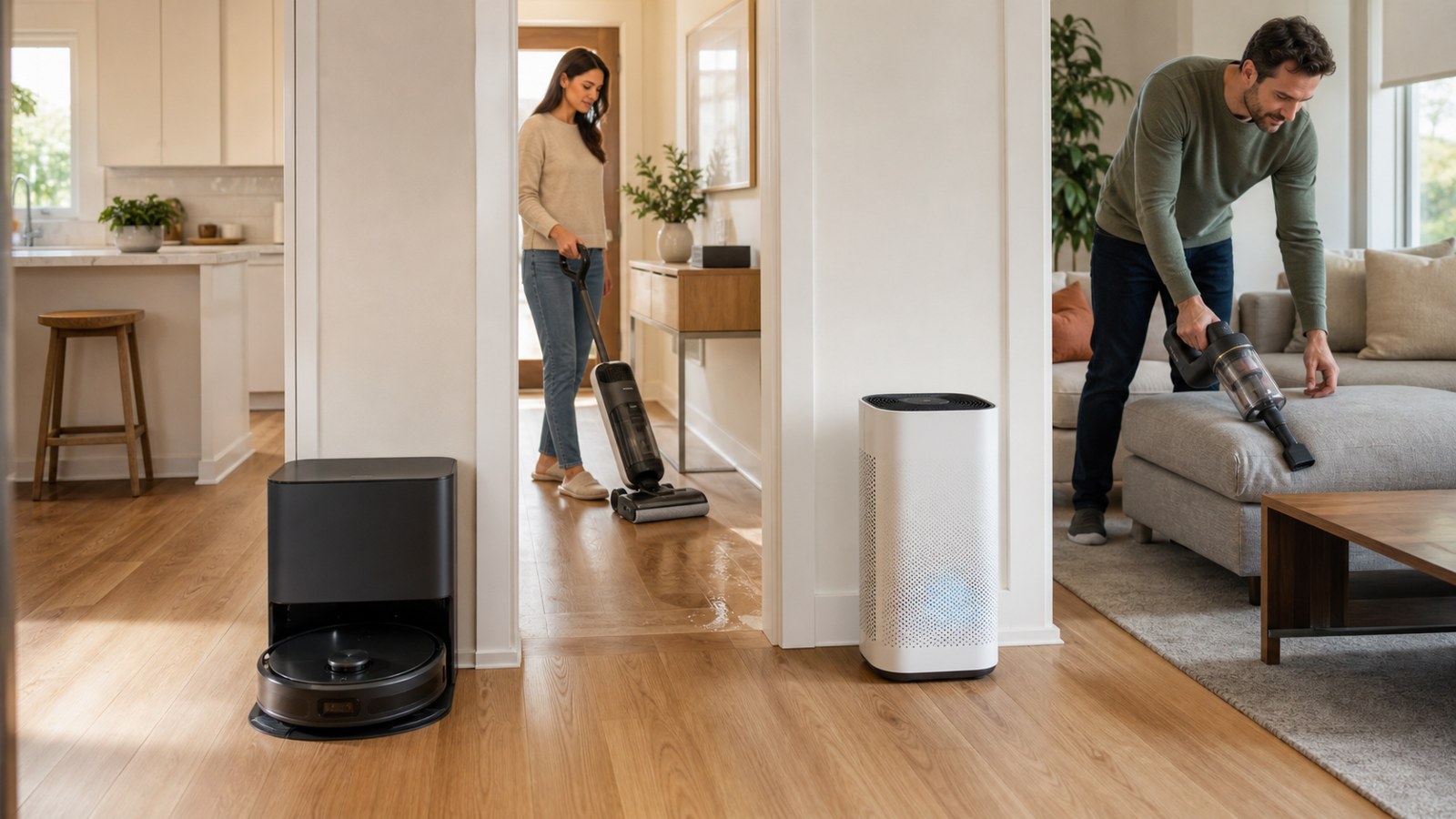
A robot vacuum should not be expected to replace a wet-dry cleaner, and a robot mop should not be expected to rescue a dried spill. Each device needs a role. Robot vacuums maintain loose debris, robot mops freshen compatible floors, cordless vacuums cover stairs and furniture, air purifiers help with airborne dust, and leak sensors protect wet areas. When roles are clear, the system feels coordinated instead of crowded.
Role clarity also makes upgrades easier. If the robot vacuum handles the hallway but the kitchen still feels sticky, the next upgrade might be a better mopping routine rather than a more expensive vacuum. If pet hair remains on upholstery, a handheld tool may solve more than another floor robot. A fully automated cleaning home grows from evidence, not impulse.
The best device mix is often modest. Three well-used tools can outperform eight neglected ones. Look for devices that solve different problems, store neatly, and share care habits the household can actually maintain.
A useful device plan also respects traffic patterns. The rooms people cross most often are usually the rooms that move dirt around the house. An entry, kitchen path, hallway, or pet route may deserve more attention than a formal room that stays tidy for days. Automation works best when it follows movement, not just square footage. Once the high-traffic paths are under control, the rest of the home is easier to maintain.
Design the Home Around Docks and Storage
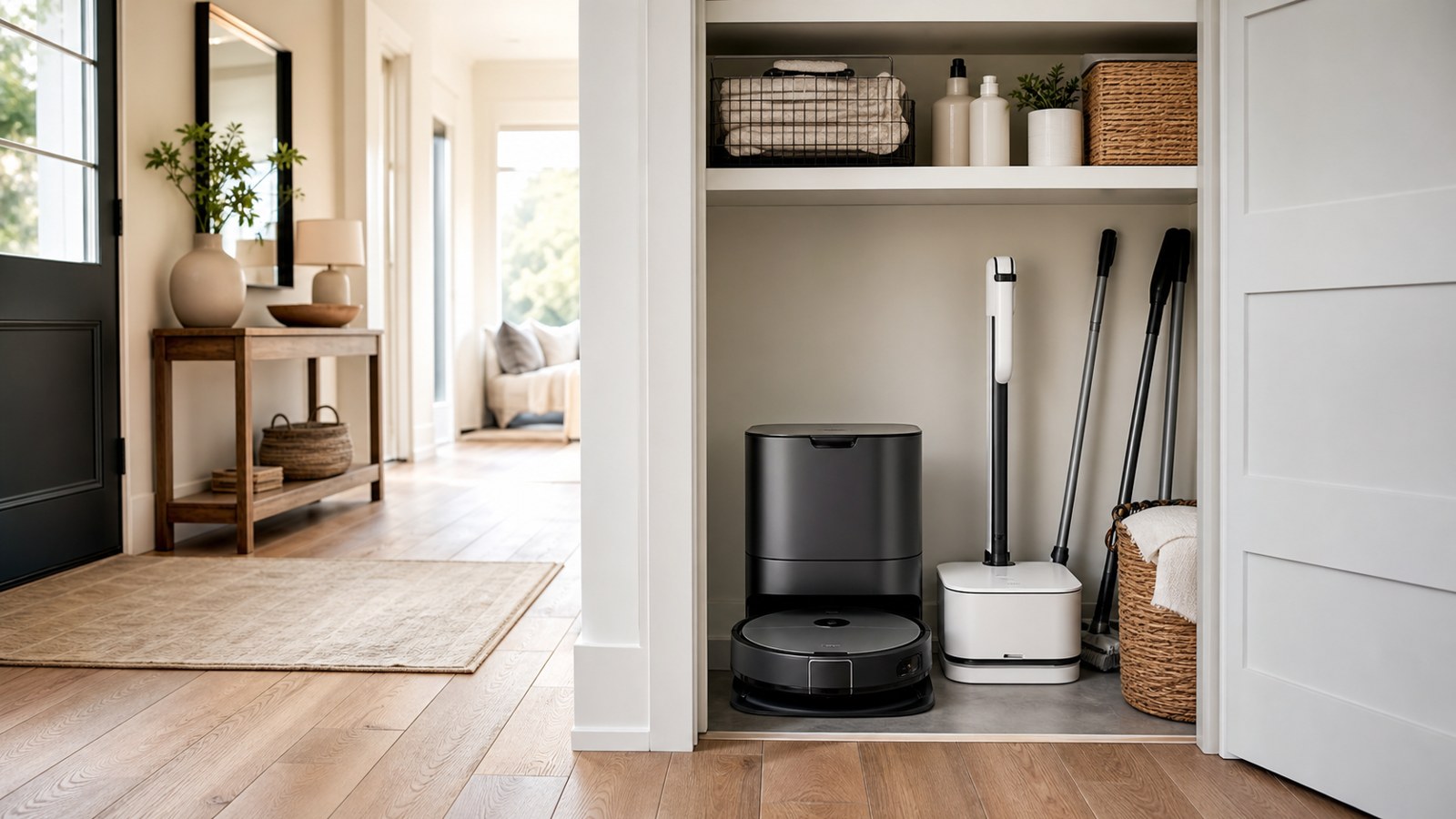
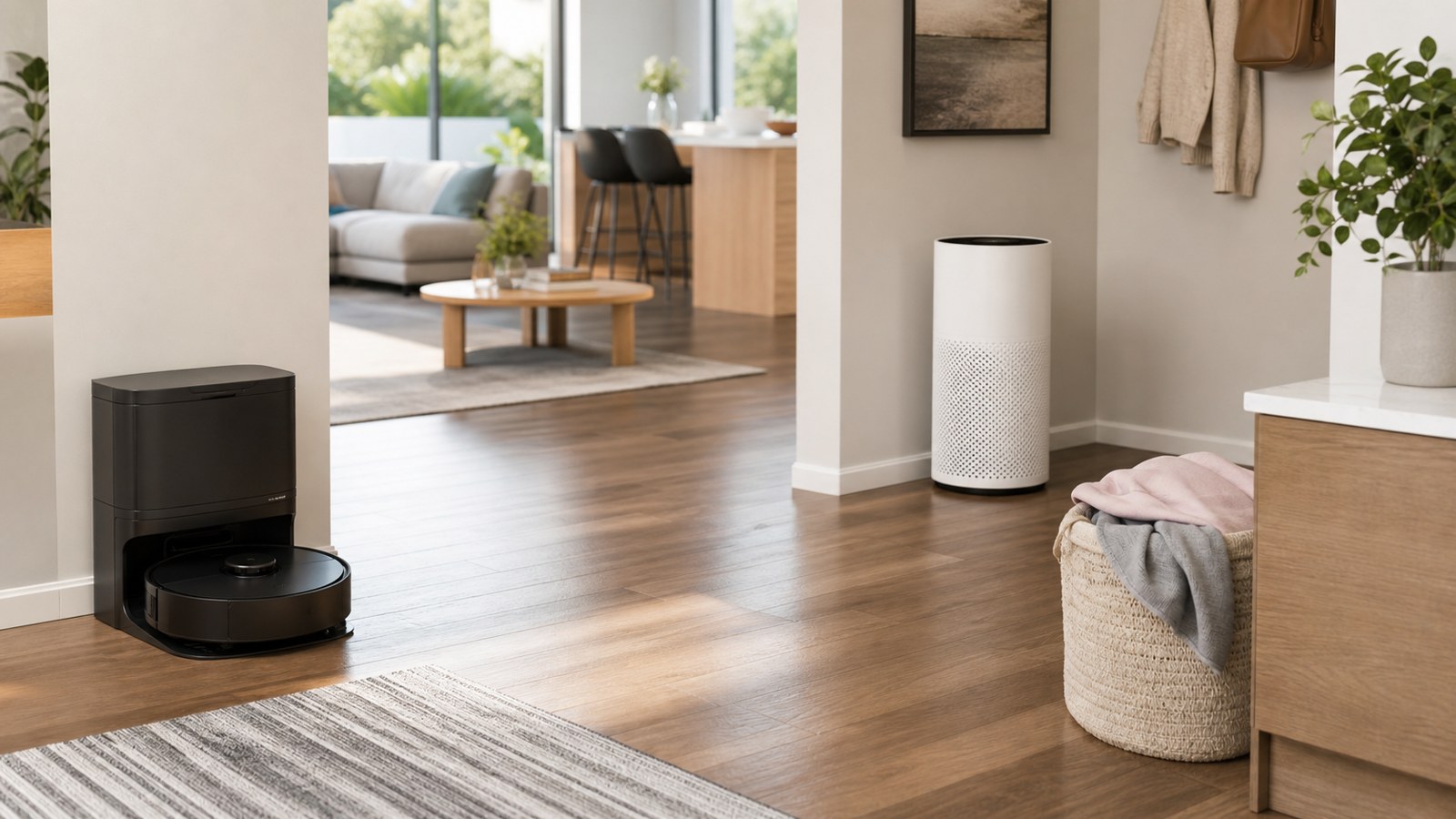
Automation depends on homes for charging, emptying, washing, and storage. A robot with a cramped dock will fail more often. A mop with no drying area will smell. Filters stored in a random closet will be forgotten until suction drops. Treat docks and maintenance stations as part of the system, not as afterthoughts tucked wherever there is an outlet.
Build Routines in Layers
A reliable automated home uses layers instead of one giant cleaning event. Daily routines can target kitchen crumbs, pet hair, and entry grit. Weekly routines can add damp mopping, air purifier checks, and detail vacuuming. Monthly routines can inspect rollers, sensors, wheels, filters, and maps. Seasonal routines can respond to pollen, mud, holiday guests, or open-window dust.
Layering keeps expectations realistic. A robot vacuum may run daily, but baseboards still need occasional attention. A smart washer may send a cycle alert, but clothes still need folding. Automation removes some repetition; it does not erase home care. The best routines make manual chores lighter because the baseline is already under control.
Use Automation Rules Carefully
It is tempting to connect every device to every trigger, but too many rules can make a home feel unpredictable. A better approach is to automate only routines that are safe, useful, and easy to understand. For example, the kitchen vacuum zone can run after dinner, the entry can run after school hours, and the air purifier can increase after cooking. Each rule should have a visible purpose.
Avoid automation that creates risk. Do not run wet mopping when delicate rugs are likely to be in place. Do not schedule noisy devices during sleep or work calls. Do not rely on a camera cleaner in private spaces unless everyone in the household is comfortable with the privacy settings. A fully automated cleaning home should feel calmer, not sneakier or more chaotic.
Automations should also have obvious stop conditions. A cleaning run should pause when a room is occupied, avoid a zone when a rug is down, or skip mopping when a water tank is empty. Even simple manual stop habits help. If someone spills flour across the kitchen, a robot mop should not be the first response. A fully automated home still needs common sense built into its routines.
When automation rules are simple, troubleshooting is easier. If the kitchen zone runs after dinner and suddenly fails, the household can check the dock, map, door, and floor conditions quickly. If twenty overlapping rules control the same device, nobody knows where to begin. A fully automated cleaning home should be understandable enough that a tired person can fix the obvious problem.
Make Maintenance a Built-In Habit
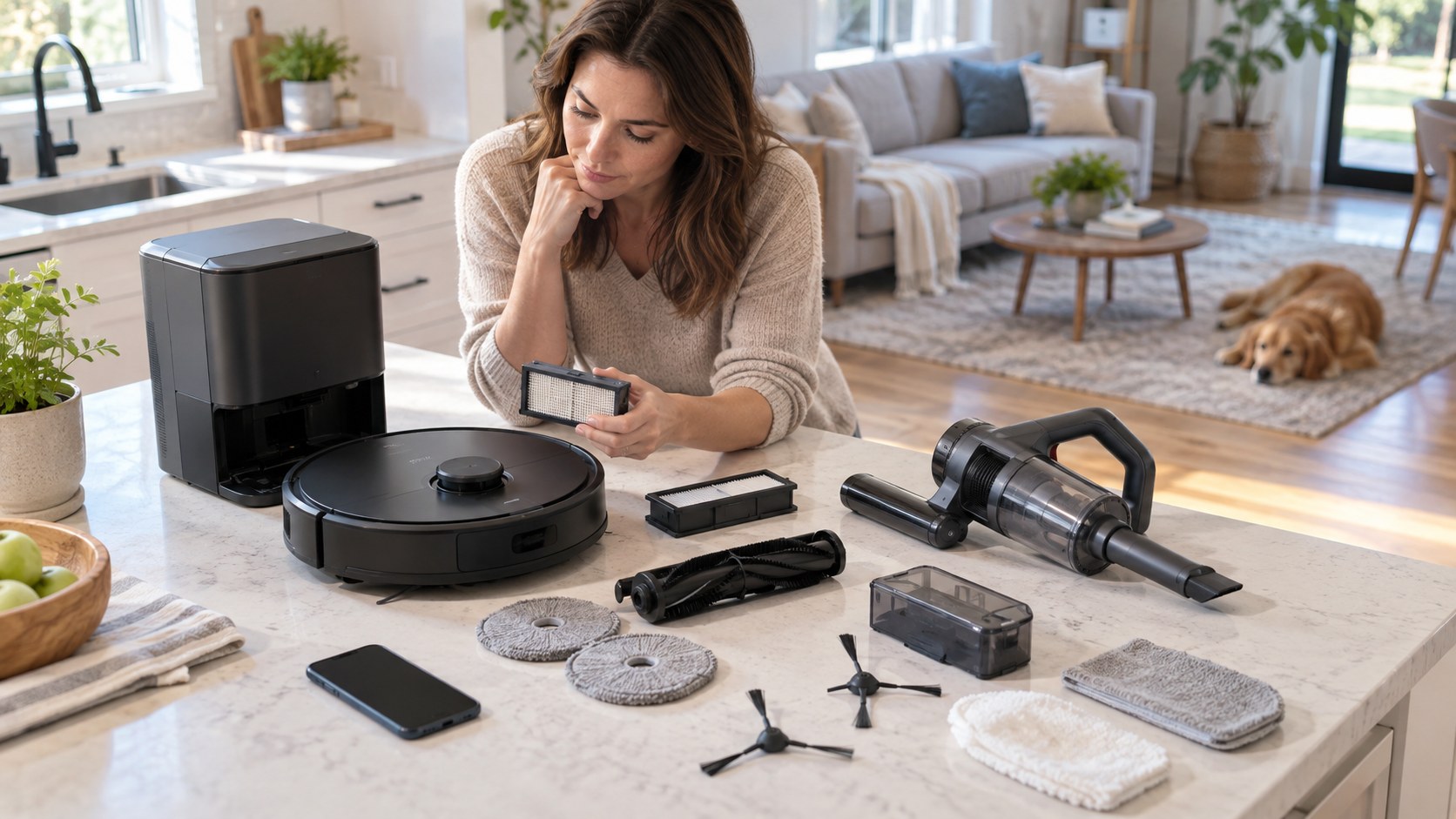
Maintenance is the difference between an automated cleaning home and a pile of expensive gadgets. Brushes wrap with hair, pads need washing, bins fill, filters clog, and sensors collect dust. The trick is to make maintenance visible and brief. A small basket near the dock, a weekly filter check, and a reminder to wash pads can keep the system dependable.
Shared households need clear ownership. If everyone assumes someone else will empty the dock bag, the system will eventually fail. Simple routines work better than vague promises: one person checks supplies on Sunday, another washes mop pads after kitchen runs, and everyone keeps cords off the floor before scheduled cleaning. Automation still needs household cooperation.
The care plan should include digital maintenance too. Review app permissions, update firmware when appropriate, and remove old maps or schedules that no longer match the home. A stale routine can be as frustrating as a dirty filter.
Supplies should be treated like part of the appliance system. Spare filters, dock bags, rollers, pads, and approved cleaners need a visible home. If replacements are hidden in a distant closet, people will postpone care until performance drops. A small labeled shelf near the main dock can prevent weeks of weak suction or smelly pads. The easier maintenance feels, the more automated the whole home becomes.
Digital maintenance matters too. Remove old schedules after vacations, update room names after furniture changes, and check privacy settings when a device app changes. Automated homes fail quietly when old rules remain in place after the household has moved on. A monthly review keeps the system aligned with real life and prevents technology from becoming a mystery nobody wants to adjust.
Plan for Exceptions and Messy Days
No automated plan survives every spill, school project, pet accident, repair visit, or holiday gathering. Keep manual backup tools ready and easy to reach. A cordless vacuum, microfiber cloths, and a proper mop still matter. Automation should reduce the ordinary load so people have more patience for the exceptions, not leave the home helpless when a device is charging or stuck.
Exceptions also include people. A child may nap, a remote worker may need quiet, a pet may be nervous, or a guest may not know why a dock needs clearance. A fully automated cleaning home should include simple household rules: which areas must stay clear, when devices should not run, and how to pause a routine quickly. Human comfort comes before technical elegance.
Messy days are also a useful test of the system’s design. If one spill, one closed door, or one missing pad breaks the entire routine, the plan is too fragile. Keep backup paths simple: a manual mop for spills, a handheld vacuum for stairs, and a quick way to pause scheduled runs. Strong automation has graceful fallbacks.
A Fully Automated Home Is Built Gradually
The best path is gradual. Start with one zone where cleaning is frequent and frustrating, then prove the routine works for several weeks. Adjust dock placement, schedule timing, no-go zones, and maintenance storage before adding another device. This slow approach may feel less exciting than buying a complete package, but it produces a system that fits the home instead of forcing the home to serve the technology.
A fully automated cleaning home is ultimately a home with less cleaning drama. Floors stay closer to clean, supplies are where they belong, alerts have a purpose, and manual chores are smaller when they arrive. If the system makes daily life quieter and more predictable, it is doing its job.
Gradual building also protects the budget. A first device teaches which features matter in the real home: navigation, noise, dock size, obstacle handling, or accessory cost. That experience is more useful than reviews alone. Each later purchase can then answer a specific problem instead of repeating the same promise in a different shape. The result is a coordinated home, not a collection of experiments.
Once the first zone works, expansion should follow the same questions each time. What mess is repeating? Which device role is missing? Where will it dock? Who will maintain it? What alert deserves attention? Those questions keep the system grounded and prevent the home from filling with overlapping gadgets. The ultimate automated setup is deliberate, not crowded.
The finished system should feel quiet. Devices should have homes, schedules should make sense, and alerts should be rare enough to deserve attention. When a fully automated cleaning home is built well, people do not talk about the technology every day. They simply notice that floors are easier to keep up with and cleaning no longer dominates the week’s loose ends. That quiet usefulness is the real sign that the home has been prepared for automation rather than merely filled with smart devices. It should feel like a household rhythm, not a technical project, and it should remain easy enough to adjust when routines, furniture, pets, or family schedules change without requiring the whole setup to be rebuilt from scratch after every ordinary disruption. That is what makes the automation sustainable for real household use over time and seasons.